by Crazy Ivan
One of my favorite things about this blog is the analytic page. It's here that I can peruse all the ins and outs of the blog. I can see who is visiting, how many people have visited, where they're from (the country, not your street address), how they found us and how often they visit. It tells me what websites have links to our forum, where people most often go after leaving the forum and how long they stayed before they took off.
It even tells me what people have Googled to find the forum. And this is actually one of the most interesting things to check.
One of the main reasons I started this blog is that when I Googled a Myachi-related question, I would always find the wrong information. I'd either be directed to a horribly incorrect wiki-answers or Yahoo Answers kind of page or I'd wind up on some random post on the forum. I might even find myself on some wholly unrelated page that just happens to have a mention of Myachi buried somewhere within it.
So when I set out to start this blog, one of the first things I did was get to answering basic questions about Myachi. That way, if somebody Googled "Who is the best Myachi player?" they would win up finding this instead of some kid on Yahoo Answers anonymously claiming that they were, in fact, the best Myachi player. I tackled many of the basic questions that I hear a lot, such as "Which is the best Myachi?", "What's the hardest trick?" and "What was the first Myachi ever made?" In fact, I make it a point to write an article on here every time I hear the same question 3 times. I figure if 3 people were curious enough to ask me, there were probably several more who never bothered to bring it up.
I also use the aforementioned analytic page to find new subjects. As long as we've been adding content now, pretty much any Myachi related question that you Google is going to turn up at least one link to this blog on the first page. That means that I often get to see questions that I haven't thought to answer yet. For example, if somebody Googled "Which is the best Corduroy Myachi?" they would still find our blog. In fact, I double checked and this is the first link they would find.
So now I can look back at the analytic page and see that somebody found our blog by Googling the best corduroy Myachi and if I've seen that same question asked before (or if I can't think of anything else to write about at the moment), I'll go ahead and write a whole article about which corduroy is best so that the next person Googling it gets a more specific answer.
The other cool thing about that feature is that it allows me to track trends in Myachi Googling. I can track which Myachi questions are asked most often and which ones are being asked more or less frequently as time goes on. Armed with that information, I can try to stay ahead of the curve by adjusting the content of the blog to whatever people are growing more interested in. I can also, of course, track the consistently most asked questions about Myachi and generate more and more content about that subject.
It should come as no great surprise that the most common subject we get questions about is breaking in a Myachi. I've posted a few articles on the subject before and they are some of the most popular articles on the blog. People are always looking for ways to break in a Myachi or new shortcuts to SUMPOY. They are always seeking out the most yummifiable Myachis and wondering which fabrics work best for which methods.
So think of this blog as an explanation in advance. If you start noticing a higher-than-usual volume of posts about breaking in Myachis, that's why. I still owe everybody a MythBusters style test of various break in methods and I haven't forgotten it, though I'm still not sure when I can fit it into my crazy schedule.
Oh, and a sort of side note to this whole thing. If there's a subject you want me to blog about, you can always email it to me or leave it in the comments, but if you wanted a more round-about way of getting it done, just Google your question a couple of times and click on the first link you see to the Myachi Blog...
Showing posts with label sumpoy. Show all posts
Showing posts with label sumpoy. Show all posts
Tuesday, October 11, 2011

Friday, September 30, 2011
Myachis That Changed the World: Number 10
by Crazy Ivan
I've had it in my head for a while to write a series of posts about the most influential Myachis of all time. To be fair, I've gone a bit grandiose with the title. As far as I know, no single Myachi has yet changed the world. Well, there was a Royal Tiger that played a pivotal role in taking out Osama Bin Laden but the details of that one are still classified.
This series will be focused on the much smaller world of Myachi and the sacks that made a pivotal difference in the way that Myachis would be made in the future. I'll be grabbing certain sacks that I deem cornerstones of Myachi's history and presenting them over the next week or two in hopes of further illuminating the evolution of the game from an idea in Myachi Man's head to the reality we see today.
I've ranked 10 sacks by their influence but I should point out in advance that my rankings were necessarily arbitrary as were my choices of which Myachis to include and which to leave out. It's impossible to objectively quantify the influence one development had on the future of the game. If you take issue with any of my rankings once this whole series is published, please feel free to make your own top 10 ranks (preferably annotated) and I'd be happy to publish a few of those as responses to this series.
I'll begin with a sack that I just can't seem to leave off of any top 10 list of Myachis I put together...

But then along came the Calvin and changed everything. If I had to rank the 1.0 series in order of jammability, it would probably break down like this if we were talking about brand new, never before jammed with Myachis:
I've had it in my head for a while to write a series of posts about the most influential Myachis of all time. To be fair, I've gone a bit grandiose with the title. As far as I know, no single Myachi has yet changed the world. Well, there was a Royal Tiger that played a pivotal role in taking out Osama Bin Laden but the details of that one are still classified.
This series will be focused on the much smaller world of Myachi and the sacks that made a pivotal difference in the way that Myachis would be made in the future. I'll be grabbing certain sacks that I deem cornerstones of Myachi's history and presenting them over the next week or two in hopes of further illuminating the evolution of the game from an idea in Myachi Man's head to the reality we see today.
I've ranked 10 sacks by their influence but I should point out in advance that my rankings were necessarily arbitrary as were my choices of which Myachis to include and which to leave out. It's impossible to objectively quantify the influence one development had on the future of the game. If you take issue with any of my rankings once this whole series is published, please feel free to make your own top 10 ranks (preferably annotated) and I'd be happy to publish a few of those as responses to this series.
I'll begin with a sack that I just can't seem to leave off of any top 10 list of Myachis I put together...
#10) The Calvin

I should admit that the Calvin barely belongs on this list at all. Part of me is force fitting it in here because it's my all time favorite Myachi and I think it belongs on every list of Myachis. But part of me also sees a significant turning point that the Calvin allowed. The Calvin was the first Myachi to really show us the absolute importance of breaking a Myachi in.
It's not an absolute, mind you, more the culmination of a long trend. We already knew that a broken in Myachi was far better than a brand new one. We already used the term "yummy" to describe a really nice Myachi and we already all had our own personal methods of breaking them in.
But up to that point, it was seen as the extension of an absolute. A broken in Slater was a spectacular jammer but a brand new Slater was already a pretty good jammer. A broken in EO Shag was a good jammer, but nowhere near as good as a broken in Slater. Similarly, a brand new EO Shag was not as instantly jammable as the fresh-from-the-box Slater.
In other words, up to that point, we all would have agreed with the following statement:
If you take two brand new Myachis, one of which is a better jammer than the other, and you break them in equally, the one that began as the better jammer will still be the better jammer.That was so universally excepted that we never would have bothered to make such a statement. You just knew that. Every sack gets better as you break it in, but one sack won't leapfrog over another if both of them are broken in.
But then along came the Calvin and changed everything. If I had to rank the 1.0 series in order of jammability, it would probably break down like this if we were talking about brand new, never before jammed with Myachis:
- The Dawg Diggity
- The Black Butter
- The Red Stripe
- The Purple Haze
- The Juice
- The Leopard Lime
- The Calvin
- The Royal Tiger
- The Eye of the Dragon
But if we were to take those same 9 Myachis and break them all in to a point where they could be said to be "yummy", the list would break down more like this:
- The Calvin
- The Dawg Diggity
- The Black Butter
- The Red Stripe
- The Purple Haze
- The Leopard Lime
- The Juice
- The Eye of the Dragon
- The Royal Tiger
Notice that most of the Myachis in question stayed in the same spot. The Leopard Lime and Juice swapped places because shag fabrics have a slightly bigger metamorphosis than phelvits and the Eye of the Dragon moved one place ahead of the Royal Tiger since the Royal Tiger has a characteristic stiffness that it's almost impossible to yummy up.
But the Calvin moved a whopping 7 places, all the way from the 3rd worst jammer to the undisputed king of the series. Had it not been for that realization, we may have continued to underestimate the importance of breaking in a sack for a lot longer. More importantly, if we hadn't known this there are some Myachis that might never have come into existence at all. A few of those might have been Myachis we could have done without (the Vette, for example), but some, like the PigSkin, the Black Rose and the Diesel are Myachis much beloved throughout the movement.
If for no other reason than it taught as the value of patience when it comes to Myachis, I nominate the Calvin as the tenth most influential Myachi in the history of the game. Keep checking back with us to see the rest of my nominees.
Monday, September 12, 2011
The Science of Myachi
by Crazy Ivan
The first thing I do each morning when I get to the office is check my messages. This might seem like a pretty straightforward responsibility, but in addition to checking my personal messages, I've got to check Myachi's messages and those include (but are not limited to):
But once in a while I get a message that is so cool or unique that I feel like I have to share it on the blog. That was the case a few days ago when I got a YouTube message from a Maniac who had a unique idea of how to spread the word in his school. He was going to use Myachi for his science project.
There are a lot of ways one could do something like that, I suppose. Myachi intersects with physics quite a bit and lessons on centifugal force and momentum could easily be wrapped up in a Myachi demonstration. But his idea was even cooler; not only does it give him a groovy science project, it also helps to answer a question that all Myachi players wonder: Which Myachi has the best grip?
I'll be filling in the details once I hear more about it, but the idea is to take Myachis of several different fabrics and measure the friction that each one creates. I'm not sure how he'll be measuring it, but I can think of a couple ways off hand. If he does it right, he might even create a measurement the rest of us can use when describing the grip of a Myachi. Like, if he finds a way to quantify it we might end up with a "Gription Quotient" and we can describe our Myachis by their relative GQ:
In case you're curious about what science-minded maniac came up with this idea, check him out on his You-Tube channel. I'm just saying that he looks like the next MythBuster in the making...
The first thing I do each morning when I get to the office is check my messages. This might seem like a pretty straightforward responsibility, but in addition to checking my personal messages, I've got to check Myachi's messages and those include (but are not limited to):
- Messages left on Myachi's Facebook page,
- @ Mentions on Twitter,
- Comments on the Blog,
- Messages over YouTube,
- PMs on the Myachi Forum,
- Emails to both my Myachi accounts,
- PMs on Myachi.com
- Comments on our YouTube videos.
But once in a while I get a message that is so cool or unique that I feel like I have to share it on the blog. That was the case a few days ago when I got a YouTube message from a Maniac who had a unique idea of how to spread the word in his school. He was going to use Myachi for his science project.
There are a lot of ways one could do something like that, I suppose. Myachi intersects with physics quite a bit and lessons on centifugal force and momentum could easily be wrapped up in a Myachi demonstration. But his idea was even cooler; not only does it give him a groovy science project, it also helps to answer a question that all Myachi players wonder: Which Myachi has the best grip?
I'll be filling in the details once I hear more about it, but the idea is to take Myachis of several different fabrics and measure the friction that each one creates. I'm not sure how he'll be measuring it, but I can think of a couple ways off hand. If he does it right, he might even create a measurement the rest of us can use when describing the grip of a Myachi. Like, if he finds a way to quantify it we might end up with a "Gription Quotient" and we can describe our Myachis by their relative GQ:
Oh, so your Gray Beard has a GQ of .715, huh? Not bad, but it's nothing compared to my Yellow Jacket and its .804Anyway, I hope to be able to add some more details (and maybe even some pictures) once he's a bit farther along with the project. At the very least, I'll be letting everyone know the results of his experiment.
In case you're curious about what science-minded maniac came up with this idea, check him out on his You-Tube channel. I'm just saying that he looks like the next MythBuster in the making...
Wednesday, June 1, 2011
Retiring a Myachi
by Crazy Ivan
When someone says that a Myachi has been "retired", there are two things they might mean by that.
If they're referring to a type of Myachi (and they usually are), they're referring to the fact that Myachi doesn't make that particular sack any more. For example, "I want to get a Blue Beard, but unfortunately it's retired". All Myachis retire after a certain amount of time, which is why they become collectible.
But there is another and less often used meaning for the term. If someone is talking about a specific Myachi and they say it's retired, they're referring to the fact that they just don't use that Myachi anymore. For example, "I have a sumpoy Eco-Kids Green, but it's retired." This essentially means that they still own that Myachi, but they don't jam with it any more.
This is different than just owning a sack you never jam with. If you picked up a Yellow Wetsuit Paper-Tag, odds are you wouldn't spend a lot of time jamming with it. You might do a few tricks with it just to see how it feels, but the Wetsuit would be way to valuable to be your every day jammer. This one would probably sit in a tube on top of your collection and would never really be a jammer.
In that instance, you wouldn't say that your Yellow Wetsuit was retired. It was valuable when you got it. Saying that your Myachi is "retired" implies that you used to jam with it all the time but no longer do.
There are several reasons a Myachi player might retire a sack. Most often, a Myachi is retired when it starts showing distressing signs of wear. If the stitching on one corner, for example, seems to be stretching out, you might realize that this sack is getting close to a blow out. You could probably get another few weeks or even months of jamming out of it and most often you would, but if you really liked that particular Myachi, you might just retire it so it never has to lose sauce.
But a Myachi doesn't have to be on its last leg to be retired. Sometimes it's pure sentimentality that convinces someone to retire their Myachi. Imagine that you have this Diggity and it's a great jammer and you've had it forever and it's your go-to Myachi. But you find that you like that Myachi so much that whenever you take it out, you're terrified that it'll get lost in a grating or slip into an elevator shaft. You love to jam with it, but you're on the edge of a heart-attack whenever you do.
That's another good time to retire a sack. Let's face it; if you jam with a Myachi a lot, eventually it will likely get lost or land in a place from which it can't be retrieved. At a certain point a Myachi is so personally valuable that you don't want to take that risk any more.
But there are a few retired sacks in my collection that were instantly retired. Sometimes a Myachi just has a story to it and that's enough to keep you from ever jamming with it again. When I met Jackie Chan, he pulled a Cold Fusion with the Red Line I had that day. The instant he handed it back to me, it was retired. Now it sits atop my shelf with sacks 100 times rarer so that when somebody asks "what's the deal with this one?" I can launch into my Jackie Chan story.
I got to thinking about this today when I was on the forum. Champ had a Coreyster that went south on him the other day. This is a Myachi he sought in trades, the first one he ever got in a mail-trade and it was his primary jammer for a long while. Yesterday it started to longboard early and by the end of the day it was beyond saving (not that he didn't put in some effort to keep it going). In the end, this one kind of retired itself.
Perhaps I should do the same thing. Perhaps instead of retiring my sacks when they get close I should just jam them out. But I just can't stand the part where you have to have the heartfelt goodbye. After all, is there really any point in having a Myachi that you never jam with anymore?
When I glance at the top shelf of my collection, it's obvious that in my opinion, the answer is a resounding "yes".
Thursday, May 26, 2011
The Progression of a Calvin
by Crazy Ivan
If you know Myachi at all, you know that the longer you use a Myachi, the better it gets. This is a process that we call "breaking in" or, occasionally, "yummification". Some Myachis start off pretty good and get great. Others start out pretty slippery and only get grippy and yummy after some serious use.
Perhaps no Myachi more aptly demonstrates this phenomena than the Calvin. My personal favorite Myachi, the Calvin starts off as a very nondescript denim sack that few people would describe as yummy. It's kind of stiff and the fabric is a bit slick, so jamming with a brand new Calvin can be something of a chore.
When the Calvin first came out it was considered something of a dud. Surrounded by the bright, vibrant colors of the 1.0 series, this Myachi was overlooked as being boring or unexceptional. There were other dull, patternless sacks in that series, of course. The Black Butter and the Dawg Diggity sat on the shelves beside it, but unlike the Calvin, they were also spectacular jammers fresh out of the pack.
Because of this, few people realized the extreme jammability of the Calvin when it was first released. We assumed that with a bit of break-in time it would get yummier, but we didn't anticipate that it would also gain grip as it got some mileage under it.
You can hardly see it in the picture, but the denim fabric naps out pretty quickly and coats the Myachi with a fine shell of catchability. You can see from the difference in the two pictures that the color of the sack has already faded a bit and the shape itself has widened a bit.
But at this point, say a couple of days after you open it, the Calvin is inferior to a similarly jammed with Black Butter or Diggity. If you jammed equally with all 3 sacks, the Butter and Diggity would be nearing their maximum level of yumminess by then. The Calvin, on the other hand, is just getting warmed up.
If you look closely, you can all but see the grip in the photo above. The little pieces of fuzz that are standing up along its surface are almost like hand-velcro at this stage making the Myachi remarkably easy to catch from a long distance throw. Close up jams are quick and confident at this point and by now the owner of this Calvin is starting to realize that they've got one of the best jammers of all time.
You'll also note that as the Calvin gets more broken in, the color gets lighter and lighter. This is a relatively minor advantage, but it does make a broken in Calvin easier to see than a new one, which slightly accelerates its trip towards uber-yummy.
But there is still another stage of development that a truly SUMPOY Calvin will go through.
At a certain point, the Calvin will break in like your favorite pair of jeans. It will mold to the contours of your body instantly. It will stay put if you catch it on a pencil tip. It will sink into your hand from a ten story drop and through it all it will still be slick enough to pull off grind moves.
The Calvin is truly a Myachi that rewards its owner. You can use the traditional methods to speed up the break in time of a Calvin and you might just get your way all the way to stage 3 without really jamming it up. But the same methods of wetting, soaping, heating and drying that will cheat you to stage 3 pretty much guarantee that the sack will never reach stage 4. The only way to get there is to earn it from day one.
If you know Myachi at all, you know that the longer you use a Myachi, the better it gets. This is a process that we call "breaking in" or, occasionally, "yummification". Some Myachis start off pretty good and get great. Others start out pretty slippery and only get grippy and yummy after some serious use.
Perhaps no Myachi more aptly demonstrates this phenomena than the Calvin. My personal favorite Myachi, the Calvin starts off as a very nondescript denim sack that few people would describe as yummy. It's kind of stiff and the fabric is a bit slick, so jamming with a brand new Calvin can be something of a chore.
 |
| The Calvin, stage one... just opened the package. |
Because of this, few people realized the extreme jammability of the Calvin when it was first released. We assumed that with a bit of break-in time it would get yummier, but we didn't anticipate that it would also gain grip as it got some mileage under it.
 |
| The Calvin, stage two... a couple of days of use. |
But at this point, say a couple of days after you open it, the Calvin is inferior to a similarly jammed with Black Butter or Diggity. If you jammed equally with all 3 sacks, the Butter and Diggity would be nearing their maximum level of yumminess by then. The Calvin, on the other hand, is just getting warmed up.
 |
| The Calvin, stage three... a few weeks of use. |
You'll also note that as the Calvin gets more broken in, the color gets lighter and lighter. This is a relatively minor advantage, but it does make a broken in Calvin easier to see than a new one, which slightly accelerates its trip towards uber-yummy.
But there is still another stage of development that a truly SUMPOY Calvin will go through.
 |
| The Calvin, final stage... almost does tricks by itself. |
The Calvin is truly a Myachi that rewards its owner. You can use the traditional methods to speed up the break in time of a Calvin and you might just get your way all the way to stage 3 without really jamming it up. But the same methods of wetting, soaping, heating and drying that will cheat you to stage 3 pretty much guarantee that the sack will never reach stage 4. The only way to get there is to earn it from day one.
 |
| The Evolution of a Calvin |
Thursday, May 19, 2011
The Worse, The Better
by Crazy Ivan
It's funny how knowledge changes your perception. I had a really interesting experience about an hour ago that perfectly demonstrates this fact as it pertains to Myachi.
Had a couple of maniacs come into HQ with one of their moms. They wanted to play a little Myachi Golf and learn some new tricks, but mostly they were here because they wanted to make some trades. Unfortunately for them, I didn't bring many tradables with me today so I kind of disappointed them.
So, as is typical in those situations, they started making offers on the sacks I did have... the ones I just told them weren't up for trades. Among the four I had with me today were the Yellow Jacket and Oaxaca that I've got up as prizes for the You-Tube contest.
I turned down a couple of trade offers for my Yellow Jacket and before long I had one dude offering me four Myachis for it. I told him that I appreciated the offer, but since I'd already promised to give that Myachi to the prize winner it wouldn't be fair for me to trade it away now.
And then mom spoke up.
"Why would you want such a ratty old Myachi anyway?" she asked.
And her son laughed. I was polite enough to hold back the chuckle that tried to escape. When she saw my Yellow Jacket and Oaxaca, she just saw two really beat up Myachis:
Now, if you're not a Myachi Maniac, you would probably look at those two sacks and say "who would want those beat up old things?" but if you're a fan of the game, you're more likely saying "I want them, I want them, I want them!"
To the layperson, something that is beat up and worn in is less valuable than something that is brand new and pristine. Mom looked at them in the same way one might examine a collectable comic book or a piece of antique furniture. The closer it is to mint condition, the more valuable it is to a collector.
This is occasionally true of a Myachi. A mint Black Belt is super hard to find and many people would value that higher than a broken in Black Belt. The same would be true for a number of paper tags and older sacks. But in Myachi, this is hardly a universal truth. The vast majority of Myachis are worth a lot more if they're not in good condition.
You already know why, of course. The more broken in a Myachi is, the easier it is to jam with. The absolute best Myachis are always the most ratty looking ones. Monk's favorite jammers all look like they're about to fall apart (don't worry, they're not), but any fan of Myachi knows they are the best of the best. The very fact that they're so beat up is what makes them the best.
I explained that to the dude's mom, but she didn't get it. She couldn't understand why her son would want to trade a pristine and unused Bedrock Red for my beat up and dirty Yellow Jacket. I even went as far as showing her exactly how yummy they were and why yumminess was so important to a Myachi player.

Still, she was unconvinced. I kind of got the vibe that she thought I was trying to rip her son off, though that was odd considering that I was telling him I wouldn't make that trade. Odd way of ripping someone off... by refusing the trade he offered.
Anyway, thought it was kind of funny. I told the maniac in question that I would let his mom come in one day with his collection and we could make a few trades. He laughed but he looked nervous enough that he might have thought I was serious. I'm sure mom would make the worst trades imaginable. She would happily trade his yummified Blue Beard for my unopened Vette. She would trade his SUMPOY Sammy for my mint condition Dribbl. She might trade away his wideboarded Reuben's for my brand-new Zoot Suit...
The moral of the story is to never let your mom broker your trades.
It's funny how knowledge changes your perception. I had a really interesting experience about an hour ago that perfectly demonstrates this fact as it pertains to Myachi.
Had a couple of maniacs come into HQ with one of their moms. They wanted to play a little Myachi Golf and learn some new tricks, but mostly they were here because they wanted to make some trades. Unfortunately for them, I didn't bring many tradables with me today so I kind of disappointed them.
So, as is typical in those situations, they started making offers on the sacks I did have... the ones I just told them weren't up for trades. Among the four I had with me today were the Yellow Jacket and Oaxaca that I've got up as prizes for the You-Tube contest.
I turned down a couple of trade offers for my Yellow Jacket and before long I had one dude offering me four Myachis for it. I told him that I appreciated the offer, but since I'd already promised to give that Myachi to the prize winner it wouldn't be fair for me to trade it away now.
And then mom spoke up.
"Why would you want such a ratty old Myachi anyway?" she asked.
And her son laughed. I was polite enough to hold back the chuckle that tried to escape. When she saw my Yellow Jacket and Oaxaca, she just saw two really beat up Myachis:
 |
| Pictured (left to right): Really Yummy and Really, Really Yummy. |
To the layperson, something that is beat up and worn in is less valuable than something that is brand new and pristine. Mom looked at them in the same way one might examine a collectable comic book or a piece of antique furniture. The closer it is to mint condition, the more valuable it is to a collector.
This is occasionally true of a Myachi. A mint Black Belt is super hard to find and many people would value that higher than a broken in Black Belt. The same would be true for a number of paper tags and older sacks. But in Myachi, this is hardly a universal truth. The vast majority of Myachis are worth a lot more if they're not in good condition.
You already know why, of course. The more broken in a Myachi is, the easier it is to jam with. The absolute best Myachis are always the most ratty looking ones. Monk's favorite jammers all look like they're about to fall apart (don't worry, they're not), but any fan of Myachi knows they are the best of the best. The very fact that they're so beat up is what makes them the best.
I explained that to the dude's mom, but she didn't get it. She couldn't understand why her son would want to trade a pristine and unused Bedrock Red for my beat up and dirty Yellow Jacket. I even went as far as showing her exactly how yummy they were and why yumminess was so important to a Myachi player.

Still, she was unconvinced. I kind of got the vibe that she thought I was trying to rip her son off, though that was odd considering that I was telling him I wouldn't make that trade. Odd way of ripping someone off... by refusing the trade he offered.
Anyway, thought it was kind of funny. I told the maniac in question that I would let his mom come in one day with his collection and we could make a few trades. He laughed but he looked nervous enough that he might have thought I was serious. I'm sure mom would make the worst trades imaginable. She would happily trade his yummified Blue Beard for my unopened Vette. She would trade his SUMPOY Sammy for my mint condition Dribbl. She might trade away his wideboarded Reuben's for my brand-new Zoot Suit...
The moral of the story is to never let your mom broker your trades.
Wednesday, March 30, 2011
The Best Myachis of All Time
by Crazy Ivan
One of the most common questions I get from newer Myachi players is "which Myachi is the best?"
If you follow this blog, you probably know that I am incapable of responding to a simple question with a simple answer, so instead I'll usually duck out of it with something like "It's mostly a matter of personal preference" and then toss out my personal favorite.
But that's because I don't want to spend 20 minutes answering a simple question. That's in the real world, of course. In the blogosphere, my goal is to spend 20 minutes answering a simple question so when Rotscale suggested this as a blog topic, I ran with it.
Of course, there is no universally accepted "Best Myachi" and each Myachi Master and Myachi player will probably give you a different answer if you ask which is the "best jammer", but there are a few sacks that almost always show up when we start discussing the greatest Myachis of all time.
Below are 5 Myachis that often get mentioned in those conversations. Like everyone, I have a personal favorite, but I'm going to try to remain objective and not spend the whole time talking about how awesome the Calvin is:
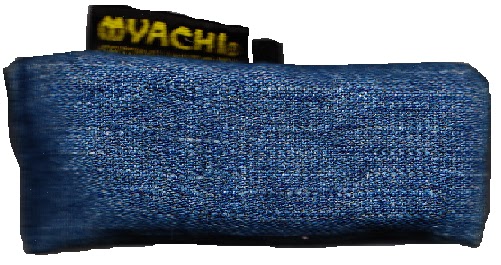
#1) The Calvin
Man, this sack is so awesome. It's awesomeness is so awesome they had to downgrade the awesomeness of other things just to keep the word relevant. Despite its unrivaled awesomeness, this sack was kind of an ugly duckling when the 1.0 series came out. Next to jammers like the Black Butter and the Dawg Diggity and striking sacks like the Royal Tiger, the Leopard Lime, the Purple Haze and the Red Stripe, the Calvin often got lost in the shuffle.
It was the worst selling Myachi in the entire series until one day when Animal finally decided to really break one in and see what it was all about. And man, let me tell you, this duckling turned into a swan. I fell in love after a few minutes of jamming with Animal's Calvin (he named her "Jezabel" and bestowed upon her the title of "the Calvin of unholy righteousness", whatever that's supposed to mean).
The Calvin is durable and gets yummier and yummier as time goes on. It takes weather well, it washes well and it turns to liquid in your hands on long distance catches. That being said, being my personal favorite doesn't make it the greatest jammer. The Calvin has since been replaced with far more jammable Myachis but it was the last Myachi that ever reigned as an undisputed Champion. For a time, virtually everyone in the game agreed that the Calvin was the best we'd ever made.
#2) The Coreyster
The Coreyster ranks high atop the list of the best jammers ever made. In a popularity contest through all of Myachidom the only thing that would stand in the way of this sack winning outright is that there aren't very many of them around and not enough jammers have used them.
Coreysters were made for a Bar Mitzvah (bet you can guess the date!) and there were only 150 of them produced. The Bar Mitzvah boy was kind enough to hook several of the Myachi Masters up with one after the party so we broke them in and were happy to discover they were awesome beyond belief.
Word made it around quickly when Monk adopted a Coreyster as his primary jammer and this sack has been a favorite ever since. Of course, because it was made in such small numbers only a small number of the people who look for these guys will ever find them.
#3) The Black Belt
I show the Eco-Kids Yellow in the picture because it was the most well known, but I would include 5 of the 6 Eco Kids Myachis in this list (the Blue one left a little to be desired jam-wise). Mostly though, I'm referring here to the original three, the Yellow, the Brown (Beige, Tan, whatever...) and the Green.
These three sacks were made for a great cause in honor of a great human being and this was one of the most rewarding fund raisers we've ever done. It really helps the memories that the Myachi I associate with it is one of my all time favorites as well.
Like the Coreyster, the Eco Kids was tossed into the lime light by Monk more than anyone else. A few ridiculous Eco Yellows in his collection left dozens of dedicated players clambering to get their hands on one (but not their palms) and it rightfully took it's place amongst the best jammers. Of course, like the last 2, this one was made in extraordinarily small numbers so it suffers from a lack of familiarity as well. The same is certainly not the case for the next contender.
#5) The Red Line
One of the most common questions I get from newer Myachi players is "which Myachi is the best?"
If you follow this blog, you probably know that I am incapable of responding to a simple question with a simple answer, so instead I'll usually duck out of it with something like "It's mostly a matter of personal preference" and then toss out my personal favorite.
But that's because I don't want to spend 20 minutes answering a simple question. That's in the real world, of course. In the blogosphere, my goal is to spend 20 minutes answering a simple question so when Rotscale suggested this as a blog topic, I ran with it.
Of course, there is no universally accepted "Best Myachi" and each Myachi Master and Myachi player will probably give you a different answer if you ask which is the "best jammer", but there are a few sacks that almost always show up when we start discussing the greatest Myachis of all time.
Below are 5 Myachis that often get mentioned in those conversations. Like everyone, I have a personal favorite, but I'm going to try to remain objective and not spend the whole time talking about how awesome the Calvin is:
#1) The Calvin
 |
| Guaranteed to break in like your favorite pair of jeans... |
It was the worst selling Myachi in the entire series until one day when Animal finally decided to really break one in and see what it was all about. And man, let me tell you, this duckling turned into a swan. I fell in love after a few minutes of jamming with Animal's Calvin (he named her "Jezabel" and bestowed upon her the title of "the Calvin of unholy righteousness", whatever that's supposed to mean).
The Calvin is durable and gets yummier and yummier as time goes on. It takes weather well, it washes well and it turns to liquid in your hands on long distance catches. That being said, being my personal favorite doesn't make it the greatest jammer. The Calvin has since been replaced with far more jammable Myachis but it was the last Myachi that ever reigned as an undisputed Champion. For a time, virtually everyone in the game agreed that the Calvin was the best we'd ever made.
#2) The Coreyster
 |
| The shame is that half the people that were at this Bar Mitzvah have one of these things and have no idea how prized it is. |
Coreysters were made for a Bar Mitzvah (bet you can guess the date!) and there were only 150 of them produced. The Bar Mitzvah boy was kind enough to hook several of the Myachi Masters up with one after the party so we broke them in and were happy to discover they were awesome beyond belief.
Word made it around quickly when Monk adopted a Coreyster as his primary jammer and this sack has been a favorite ever since. Of course, because it was made in such small numbers only a small number of the people who look for these guys will ever find them.
#3) The Black Belt
 |
| The ninja of Myachis. |
I suppose I could have just as easily substituted any of the belts here, but the connotations of the Black Belt are such that it's the obvious choice. What says "mastery of skill" like a Black Belt? Especially if it happens to be one of the most spectacularly yummy Myachi to ever grace the human hand.
Like the Coreyster, the Black Belt was made in a very small number. Only 121 of them were produced at all and even fewer White and Blue Belts were made (you'd know how many if you'd done your homework on the Sackthology!). So like the Coreyster not a large enough percentage of the Myachi population has direct knowledge of how great these guys really are.
But unlike the Coreyster, the Black Belt is a legend just for being an awesome pitch black Myachi with a glyph on it called the Black Belt that is uber-rare. Even if this thing jammed worse than a Tootsie-Roll it would be prized in the Myachi world. On top of that it's one of the greatest jammers we've ever made so word of its jammability quicky reached every corner of the Myachiverse. I'd venture to say that even most Myachi Maniacs who've never jammed with a Black Belt still know it as one of the greatest jammers.
#4) The Eco Kids
 |
| You know why the tag's blurry? I couldn't stop jamming with this thing long enough to take a still photo. That's why. |
These three sacks were made for a great cause in honor of a great human being and this was one of the most rewarding fund raisers we've ever done. It really helps the memories that the Myachi I associate with it is one of my all time favorites as well.
Like the Coreyster, the Eco Kids was tossed into the lime light by Monk more than anyone else. A few ridiculous Eco Yellows in his collection left dozens of dedicated players clambering to get their hands on one (but not their palms) and it rightfully took it's place amongst the best jammers. Of course, like the last 2, this one was made in extraordinarily small numbers so it suffers from a lack of familiarity as well. The same is certainly not the case for the next contender.
#5) The Red Line
 |
| And in a pinch you can also play little tiny checkers on them. |
To be fair, there are any number of great corduroy sacks I could have used here. The Red Line is not intrinsically better than the Finish Line or the Starting Line and one could certainly make the case that it's no better than the Gang Green, the Beards or the Yellow Jacket. I choose the Red Line as my example because it's plentiful. It's one of the most widely available corduroys ever made and it is unquestionably jammable.
It has a bit of an advantage on the last three sacks. While almost all Coreysters, Black Belts and Eco Kids became great jammers, some long-boarded a little too much and others never really broke in to a legendary playability. The Red Lines were virtually 100% jammable.
This sack was so popular that it was rereleased in several series after being accidentally released at the tail end of the 3.2 series (funny story... I'll have to tell it to you someday). They came at a time when the corduroy was just being recognized as a superior jam-fabric and their neutral pattern and top shelf jammability has made and kept them favorites for jammers since their release.
-----
There are so many more Myachis that deserve mention here. I will probably be berated in e-mails if I don't at least toss a nod to such legendary sacks as the Suffolk Downs, the recent but already legendary CMC, the Members Solutions, the Syd and any of a couple dozen corduroys. I'd love to keep going but this list has to end somewhere.
The truth is that you could never find the best jammer by looking at a list anyway. The simple answer to the simple question of "Which sack is the best jammer?" is "The one you jam with the most", and that's all there is to it. If you put enough TLC into a Fudge Stripe it will be a superior jammer even if it's never going to make anyone else's list of the best jammers of all time.
Any sack can be the best jammer if you jam with it enough.
Okay... not any sack. I'm not sold that anybody could break in a Vette, a Neo or a Candy Corn enough to make them Sumpoy but I'd love to be proven wrong.
What About the Break In Test?
by Crazy Ivan
So last week I talked a tall game about how I was going to be testing out the various popular Myachi break-in techniques. I acted like I was Adam Savage over here promising to throw down a Myth-Busters style scientific experiment to judge the effectiveness of all the different common ways of yummying up a Myachi.
And then 10 days went by and I never said another thing about it. It's almost like I didn't want you to know which method worked.
The truth of the matter is even worse. I actually haven't done the test at all yet. When I wrote the blog last week I underestimated two things: How hard it would be to get enough identical Myachis to test and how intricate some of these break in methods are.
Animal pointed out to me that to do this properly, I would need several different types of fabric to test. I would have to at least test something easy to break in (like a corduroy) and something difficult to break in (like a denim), but ideally I should do something in between as well (like a suede). That sounded good, but the idea of acquiring 8 of each of three different types of sack was pretty daunting. Keep in mind that there is a lot of difference between one corduroy and another so it's not like I just needed 8 corduroy sacks to test, I needed 8 Aztec Reds (or Phat Kat Greens or Finish Lines or whatever).
It wouldn't do me any good to use the new 5.0s because they're already so much more jammable than most sacks so that would prejudice my experiment as well. What I needed was 8 of each of older sacks. And, to make matters worse, they all had to be in mint condition because if any of them had been jammed with before they wouldn't be going into the experiment equally jammable.
That part took a lot longer than I thought, but eventually I (sort of) accomplished it.
But by then many people had pointed out errors in my test design as well. As popular as it was, I wasn't going to be testing the "Dragon" method according to my first post on this. I also wasn't going to be trying enough of the stuff in conjunction to test the interplay between one method and another.
So like a good Myth Buster, I went back and redesigned my protocols altogether. To do so, I've had to radically change my schedule on it (I was supposed to be done the day before yesterday and I haven't even started), but now we're locked and loaded and ready to go. I'll post an update (possibly with video) tomorrow once I get things going and have all test underway.
And I apologize for getting your hopes up and then dashing them, but look on the bright side... think of all the suspense I've built up now.
Monday, March 21, 2011
Measuring Yumminess
by Crazy Ivan
The Myachiverse has long relied on vague and undefined terms when it comes to describing how broken in a Myachi is. Someone might refer to their Myachi as "stiff", "yummy", "uber-yummy" or "sumpoy". All these terms have meaning in relation to one another; yummy is better than stiff and sumpoy is better than yummy, but they don't mean a whole heck of a lot on their own.
I've seen several arguments in the past whether on the forum, the chat or in person where two maniacs debate whether a particular sack is sumpoy or merely uber-yummy. The problem, of course, is that there is no exact definition for either term. Sumpoy is the top of the line, but there's no clear demarcation between truly sumpoy and mostly sumpoy.
Up until now, this has really just been a minor issue for quibbling Myachi-ites, but today that problem presents itself to me in a whole new way.
You see, today marks the beginning or my Myth-Buster-esque attempt to figure out what really works and what doesn't when it comes to breaking in a Myachi. Today's mission is to gather up all the sacks I'll need and to do this right I need 24 different Myachis of three different types. They have to be identical sacks that are all unopened and this is actually proving to be tougher than I'd expected.
But I'm also looking down the road. In order for this test to have any real scientific accuracy, I'm going to have to measure the relative yumminess of each sack at the end. I'll need some kind of point where I can say, "okay, yeah, this Myachi is all the way broken in." Barring that, I at least need an objective measure of which of two sacks are more broken in.
This will be easy where the difference is huge. It's pretty easy to say one sack is more broken in if it's way more broken in, but what about the slight differences between nearly equal methods? Just going by my own random assessment isn't very scientific at all.
To solve this problem, I'm going to be testing my Myachis in three ways and I'll add more tests if anyone has any suggestions for other purely objective and quantifiable ways to test them.
#1) Subjective Opinions
Like I said, this is the exact opposite of being objective but yumminess is a pretty straight forward thing. I'll be offering all of the Myachis to Monk, Kid, Pinky, Animal, Mav, Bones, Noodles and Bamboo and asking them to rate their yumminess on a 10 point scale. I'll average all the scores and that will provide me with my base number of yumminess.
#2) Unassisted Fold
I'll take each Myachi and place it on a thick horizontal wire like a coat hanger. I'll place them all tag and glowstick loop up and I'll measure the angle that they fold to. The reasoning is that a Myachi that isn't broken in won't fold much or won't fold at all, but a really yummy Myachi will fold right up. If one Myachi folds (on it's own) to a 25 degree angle and the other folds to 30 degrees the second Myachi is obviously at least a little bit more broken in.
#3) Forced Fold
For this test I'll fold the Myachis long ways across the flat side. I'll crease the middle as much as I can and work the secret sauce to either side then get the two edges to fold as close together as possible. I'll measure the distance between the seams and that will give me yet another measure of how broken in the Myachi is.
I know this might sound overly complicated, but to measure slight differences we're going to have to go all lab coat on this one. I'm actually dying of curiosity on this one myself and I'll be doing my best to build the suspense between now and next Monday when I do the reveal.
Saturday, March 19, 2011
Breaking in a Myachi: The Experiment Begins
by Crazy Ivan
I got an e-mail yesterday that ran all of one sentence:
"Should I rub hand lotion into my Myachi and stick in under my mattress?"
To most people, that would be a really weird question. I like to imagine that e-mail accidentally getting sent to some random dude who then spends the rest of his life trying to figure out what the heck it was all about.
But I know exactly why he was asking. He has a stiff Myachi, he wants a yummy one and he's probably heard all kinds of weird, random stuff in way of advice on how to break his Myachi in. There are a ton of common methods and most of them work very well. There are other methods, though, that may not work at all.
I'd love to list the ones that work and those that don't, but to be honest, I really haven't experimented with all of them. I have a method that I use and it works well for me, but I feel obligated as something of a Myachi historian to really flesh out all these other methods.
So I'm writing this entry to announce my intention to do a Myth Busters style experiment. Starting Monday I'm going to get 8 Myachis, all exactly the same, and I'm going to give myself 7 days to break them in using 6 different common methods. After the whole thing is said and done, we're going to examine all the Myachis and see what does work and what doesn't. Hopefully, in 9 days we have the definitive answer as to what is the best way to break a Myachi in.
Before we get into all of that, though, let me give you a quick run down of the methods I'll be testing:
#1) Wetting and Drying
This one definitely has an effect. I learned this during my first summer with Myachi where we had an outdoor booth at Dollywood. Every time it rained (and it rained a lot), all of our Myachis would get wet and we'd have to dry them in the sun whenever it finally came back out. We saw that the demo sacks that had been wet and dried generally worked much better than the ones we'd managed to keep dry throughout.
Many methods of breaking in a Myachi involve wetting it and then adding some other substance. A lot of the reason that I'm undertaking this experiment is to see how much of the break in method is due to the water and how much is added by the additional substance.
#2) Shampoo
This is our first foreign substance and it's probably the most common. It makes sense that the detergent in shampoo would help to break down the fibers in the Myachi. They might remove foreign particles that give it a bit of extra stiffness. But of course, it's entirely possible that this method only seems to work because to do it you have to get the Myachi really wet.
I've actually heard people go as far as to say which shampoos work better. I have to think that would make zero difference, but if we find a significant advantage in the shampoo method, maybe we'll test different shampoos later.
#3) Conditioner
This is usually done in conjunction with the shampoo method and this one is almost certainly over the top. Chemically speaking, conditioner is essentially a wax for your hair that is designed to bind to hair, fill in damaged spots, make in shiny, et cetera. That being said, it's hard to imagine it helping in the break in process of a Myachi. If the polymers stuck to the Myachi at all, one would expect they'd make it harder to catch rather than easier.
That being said, I know a lot of Myachi players that swear by this method and some of them have the most broken in sacks in the game. I'm far from an expert on hair care products so I'd love to be proven wrong in my assumption that conditioner won't help.
#4) Moisturizing Lotion
This is another common substance add that may or may not include wetting the Myachi. Rubbing hand lotion into a Myachi came into vogue over the last two years or so and now a lot of jammers swear by it. I've actually never tried this method myself and I'm kind of curious about it. From my extremely limited understanding of science I can't think of anything in moisturizer that would effect the relative yumminess of a Myachi, but hey, that's why we're doing the experiment.
#5) The Fold & Rub
This is probably the 2nd oldest method in the game. In this one, you basically just rub, fold, squeeze and smack around your Myachi. Since the point of all of this is to break in the fibers of the fabric, it makes perfect sense that folding and rubbing will make a big difference.
The big questions, of course, are how big of a difference does it make and how quickly is that difference made? This will be the hardest method to test scientifically because it's not very specific. That being said, this is one of the methods that I actually use so I have a pretty solid methodology to start with.
#6) Rubber Bands
There's probably some truth to this one as well, but it's any body's guess how much. This is a pretty common method for breaking in a new baseball mitt or a new pair of shoes so it stand to reason that it would work with a Myachi as well.
The idea here is to cocoon the Myachi in rubber bands. This folds the fabric and twists it in all kinds of weird ways and the hope is that this stress on the fabric will start to break down some of the stiffness in the fibers just like you do with the Fold & Rub. It will be interesting to see how this works compared with the much more painstaking and labor intensive method described above.
#7) Under the Mattress
This is another method that almost certainly comes from common baseball mitt procedures. I seriously doubt that it has much of an effect on something as small as a Myachi, but again, a number of seasoned jammers all but swear by it.
This one might be tough for me to test because I have a memory foam mattress and I don't think that will work the same as a traditional spring mattress. Just to be thorough, I'll have one of the guys test this method and they may even do so unwittingly. Perhaps I'll just sneak a Myachi under Mavericks mattress on Monday afternoon and retrieve it in a week.
#8) Jamming
Obviously every scientific experiment needs a control so I'll be using a 8th Myachi in this experiment as well. This one I'll just keep with me every day of the week and jam with here and there. I won't rub or fold it, I won't wet it or shampoo it and I won't wrap it in rubber bands or leave it under my mattress.
My standard answer whenever people have asked me in the past "how do I break my Myachi in?" has always been, "just jam with it". Generally speaking, that's all I ever do. Once in a while I'll do a bit of fold and rub on a newer sack, but 99% of my break in method is just playing Myachi with it.
I don't doubt that some of the other methods are more effective and quicker than simply jamming, but it will be interesting to see the difference. If you can break in a Myachi 10 times quicker by wetting and shampooing it then it's definitely worth it. If you're only making a slight difference then probably not. After all, playing with a Myachi is fun. Shampooing one? Not so much.
I'll be getting snippets of video over the week and I'll keep everyone posted on the progress. If you have another method or if there's another method you've heard about that you'd like to see tested, let me know. E-mail me at crazyivan@myachi.com or leave it in the comments section below. If you get me before Monday I might add your method to this experiment. If not, don't worry. I'm sure I'll be revisiting this one in the future.
Subscribe to:
Posts (Atom)